

Mastering the Continental Grip: A Key Step in Padel Success
The continental grip is one of the most important foundations in padel, and mastering it can make a significant difference in your performance. Whether you’re a beginner or working on refining your skills, adopting the correct grip early can prevent bad habits and set you on the path to becoming a more complete player.
What is the Continental Grip?
Think of the continental grip as the ultimate all-in-one tool for padel. It’s versatile, allowing you to execute forehands, backhands, volleys, and even spins like topspin or flat shots, all without needing to constantly adjust how you hold your racket. This adaptability is key, especially in the fast-paced world of padel where quick reactions are essential.
With the continental grip, you’ll notice smoother movements and quicker transitions between strokes. This not only improves your efficiency but also builds confidence, as you can focus more on your game strategy rather than worrying about adjusting your grip mid-rally.
Why Is the Continental Grip Important?
- Stability and Control: A solid grip provides a stable foundation for consistent shots, helping you maintain control over the ball’s direction and speed.
- Prevents Bad Habits: Using the continental grip early on reduces the risk of developing poor techniques that could limit your progress later. Bad habits can be hard to break and may lead to injury or frustration.
- Builds Confidence: Knowing you have the correct grip allows you to focus on positioning, decision-making, and strategy without second-guessing your technique.
How to Learn the Continental Grip
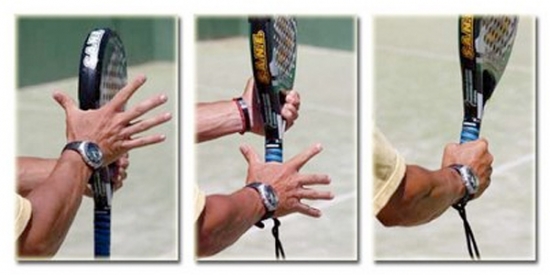
1. Hammer Analogy
Imagine holding your racket like a hammer, with the racket’s face perpendicular to the ground. This simple visual can help you understand how your hand should wrap around the grip naturally and effectively.
2. The ‘V’ Technique
Look at the space between your thumb and index finger, it should form a ‘V.’ Align this ‘V’ along the top edge of the racket’s handle and slide your hand into position. This is an easy reference you can check during practice to ensure consistency.
Benefits of the Continental Grip
- Precision for Low Balls: This grip allows you to handle low or late balls with greater accuracy, keeping the rally alive and forcing your opponent to stay in the point.
- Effortless Spin Variations: Whether it’s flat shots, slices, or topspin, the continental grip lets you switch between spins seamlessly, keeping your opponent guessing and under pressure.
- Simplified Technique: By not needing to change grips for different strokes, you can focus on strategy and gameplay, simplifying the technical aspect of your game.
Tips for Practicing the Continental Grip
- Repetition is Key: Regularly reinforce the correct grip during training to build muscle memory.
- Grip Trainer Tools: A grip trainer can help you maintain the correct hand position, especially if you find your grip slipping during play.
- Video Feedback: Record your strokes to visually check your grip and identify areas for improvement.
Adapting for Younger Players
For children or beginners with less strength or coordination, slightly adjusting the grip might be necessary at first. The goal is to make learning fun and accessible. As they grow and develop their skills, transitioning to the continental grip becomes easier and more natural.
Your Foundation for Success
The continental grip is the cornerstone of a strong padel foundation. By adopting this grip early, players can avoid unnecessary obstacles and enjoy a smoother path to improvement. Whether you’re executing a precise volley or outsmarting your opponent with spin, the continental grip empowers you to perform with confidence and control.
Start practicing the continental grip today, and experience how this small adjustment can make a big difference in your padel game.